
Ode to it all
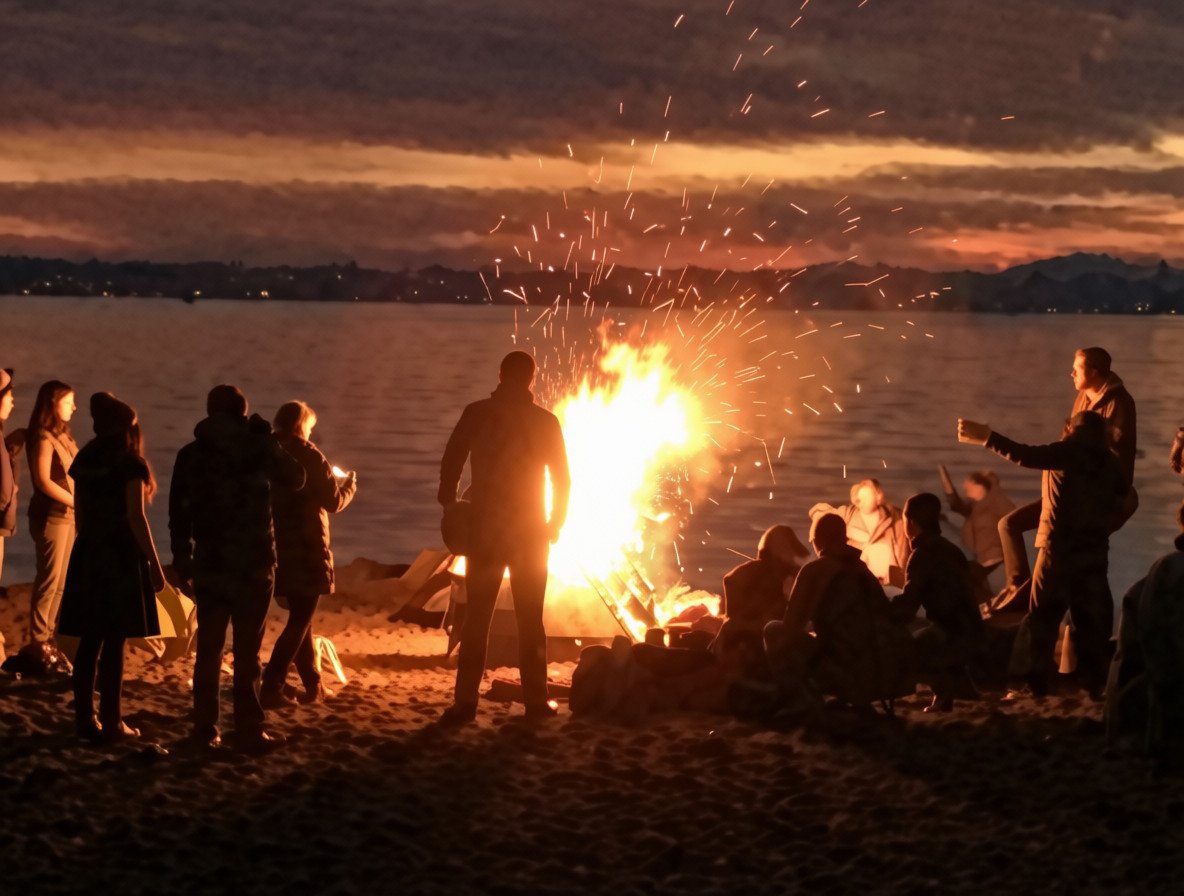
To friends and foes, past, present, and future.
To those I’ve loved and lost, and those who love me still.
To the blows that knocked me down,
and the glimmer of light that helped me rise.
To this imperfect body whose wear and tear tell a story of a life lived,
and the blessing of breath.
To feeling lost and alone,
and the power of community.
To knowing. And unknowing.
To the connected and the estranged.
To sorrow and joy. Anger and awe.
To those who’ve touched my life in big ways and small.
To forgiveness, given and received.
To the contrasts that shape me.
Pain and healing, loss and love, despair and hope.
Each moment weaves the fabric of who I am.
Gratitude blooms in contrast.
Thank you, all.
Lost Be the Day
This year has been heavy. Lately I keep returning to a passage from Nietzsche’s Thus Spoke Zarathustra, in the chapter “Old and New Tables” (Thomas Common’s translation):

This year has been heavy.
Heartbreak and outrage at a news feed I can barely look at some mornings.
It lands on grief I am already carrying. I’ve lost people I love, and that grief doesn’t step aside when the news gets worse. It stacks on top.
Lately, I keep returning to a passage from Nietzsche’s Thus Spoke Zarathustra, in the chapter “Old and New Tables” (Thomas Common’s translation):
“And lost be the day to us in which a measure hath not been danced. And false be every truth which hath not had laughter along with it!”
Lines like these have been used to tell people to cheer up, look on the bright side, find gratitude. I’m not using them that way, and I don’t think Nietzsche was either. He wrote them while chronically ill, mostly alone, with almost no readers. He knew heaviness well.
Look at the word “measure.” A measure is a single bar of music, and in older English, to tread a measure meant to dance. Either way, the unit is small. One bar. Some laughter along the way. A day can be mostly grief, mostly rage, mostly dread, and still count. You don’t have to feel better first. You don’t need to be grateful.
A dance will not bring back the people I’ve lost.
A laugh will not stop the cruelty.
Neither one will fix what is broken in the world or stop my heart from breaking.
Here is what they do. They remind me I’m still in my body. They remind me the day was at least a little bit mine.
The second line is the part I’m curious about. A truth that came with no laughter at all deserves suspicion. Laughing takes a little distance. People who can laugh at an idea, even one they love, are not clinging to it out of fear or pride. And laughing at cruelty, at pomposity, at anyone who wants us smaller, is a way of refusing to be flattened. That laughter can have teeth.
Here is what a measure looks like for me lately:
A dance in the morning, while the coffee brews.
Laughing at a funny text from a friend.
Time on the pickleball court where I forget everything else.
So here is my pledge for the hard days:
Feel all of it.
Let the grief be as big as it is.
Let the anger have its say.
Keep looking at what is happening.
And at least once, move.
At least once, laugh.
If you are carrying something heavy right now, I won’t tell you to lighten up. Count the day by one dance and one laugh. Everything else can be as heavy as it needs to be.
What was your one dance, your one laugh this week?
When Women Speak: The Cost of Disbelief

Once again, in the wake of recent headlines, I find myself witnessing a familiar story unfold, and the heaviness of it lingers.
There is real harm in our rush to judgment, especially when our first impulse is to doubt women who come forward with allegations of abuse. Due process matters. This is about something else.
It’s about our reflex.
Imagine if, instead of reacting on autopilot, we took a breath and noticed what comes up. What makes me doubt first? What beliefs am I carrying, and where did they come from? When we meet our own reactions with curiosity and choose to listen rather than judge, we make room for honesty and justice.
A fair, thorough process protects everyone. It guards against false accusations and injustice. These principles matter to survivors, the accused, and to anyone who cares about truth.
Still, time after time, women who speak up are met with disbelief, dismissal, and attack.
This is why so many women stay silent. When you can already see what awaits you, the doubt, the scrutiny, the attacks on your character, and the scales tipped against you, silence can seem like the only the only safe option. Waiting to speak is not deceit; it is survival.
And in that silence, harm continues without accountability, whether there is clear evidence or not.
I know this personally. I’ve spoken and not been believed. I’ve seen harm minimized and accountability disappear. That experience lives in my body, not just my memory. I’m not alone in this.
I’ve spent decades healing from things that should never have happened. Doing the hard work, caring for others, and slowly, carefully, learning to care for myself. That journey has shaped all that I am and everything I do.
It has also shown me this: silence comes at a steep price. No one should be punished for breaking it.
We are capable of holding more than one truth. We can take allegations seriously and uphold due process. These are not opposing values.
What troubles me is how often we fail at the very beginning. How quickly disbelief takes hold and how fiercely hostility rises when a woman dares to find her voice.
Fairness must matter for everyone, including the one who finally finds the courage to speak.
Finding Hope in Difficult Times

The political climate today feels overwhelming, even hopeless. The constant barrage of divisiveness, injustice, and uncertainty leaves many of us questioning how to move forward. But amid this chaos, unease can serve as a compass, guiding us toward greater understanding, action, and connection. This post explores how to navigate feelings of overwhelm and use them as a catalyst for resilience and hope.
1. Understanding the Overwhelm Feeling overwhelmed or hopeless is a natural response to the intensity of our current political landscape. These emotions often arise because we care deeply about justice, fairness, and the well-being of others. Rather than suppressing these feelings, consider them as evidence of your humanity and desire for a better world.
Overwhelm can indicate that something important to you is at stake.
Hopelessness might be a sign that you’re deeply invested in creating change but feel powerless.
Reframe these emotions as signals rather than obstacles.
2. Unease as a Tool for Awareness When we lean into our unease, it can help us identify what truly matters. Ask yourself:
What specific issues or events are triggering my overwhelm?
What values are being challenged in this moment?
By naming these concerns, we can transform vague hopelessness into actionable clarity.
3. Finding Connection Amid Chaos In times of political insanity, connection becomes a lifeline. Unease can foster solidarity, reminding us that we are not alone in our struggles.
Seek Community: Join groups, attend discussions, or connect with like-minded individuals who share your concerns.
Share Vulnerabilities: Opening up about your unease can inspire others to do the same, creating a sense of shared strength.
4. Turning Overwhelm into Action Hopelessness often stems from the belief that we can’t make a difference. But small, consistent actions have power.
Educate Yourself: Understanding the issues can reduce feelings of powerlessness.
Take Action: Write letters, volunteer, or support organizations that align with your values.
Set Boundaries: Limit exposure to distressing news and focus on what you can control.
5. Embracing Hope Through Unease Hope isn’t the absence of unease; it’s the decision to keep going despite it. Unease can push us to imagine a better future and take the steps to get there.
Celebrate Small Wins: Recognize and honor progress, even if it feels incremental.
Focus on What’s Possible: Unease can reveal opportunities for change that we may not have considered before.
The political climate may feel overwhelming, but it also holds the potential for growth, solidarity, and transformation. By embracing unease, we can tap into the power of connection and action, navigating chaos with resilience and hope.
Remember: You’re not alone. Your unease is a testament to your care and commitment. Together, we can channel these emotions into creating a world that reflects the values we hold dear.
What small action will you take today to move from overwhelm to empowerment?
Avoidance

I am an old friend.
Tried and true.
My name is Avoidance.
And I’m here to protect you.
Always there to keep you from harm,
in all the places it may find you.
Should discomfort arrive as you anticipate the blank page that calls you to write,
I’ll keep you from picking up the pen.
Should disappointment creep in when you feel your achievements have fallen short,
I’ll keep you from connecting to what matters most in the first place.
Should heartache beat you down after losing so many loved ones,
I’ll attach your heart to someone who doesn’t know how to love so the pain will never take you by surprise again.
I’ve got your back.
I’ll confuse, confound, distract, and numb.
Whatever it takes to keep you from
discomfort, disappointment, and heartache.
Dear friend,
Thank you for being there.
You have never let me down.
But here is the thing.
The protection you have so lovingly provided,
that is meant to keep me from harm,
also keeps me from living fully.
That kind of protection lacks discernment.
You see, not all discomfort is bad.
I need it to venture and grow.
Not all disappointment is to be avoided.
As it can teach me things, provide perspective, build resilience, and connect me to what matters most.
Not all heartache is bad.
Without love, there is no heartache. Love is worth the risk.
I don’t need to be protected.
I need to be vulnerable.
I need to risk failure.
I need to risk disappointment.
You can trust that I know the boundaries.
And should I stumble and fall, I will get up again ever stronger.
So, thank you dear friend.
And farewell.
Unconditional Writing

Writing used to be a daily ritual. Journaling, free form writing, reflective essays - whatever the name, it was a way that I started my day.
I viewed the pages as a companion, a trusted friend. A place I could always go to release any thoughts that were swirling around inside my head.
The pages did not judge. There was plenty of that coming from me. The pages were there to listen, no matter how dark or self-deprecating the expression. The pages accepted it all.
I miss my friend and the ritual we shared. So why did I abandon her?
Perhaps it was my judgement that the pages had become a place of negativity. That a pattern had emerged of framing my experiences, my reflections, in a short-sighted and non-serving way. That unless I was able to re-write the pages with positivity, they would become more detrimental than beneficial. I questioned the health of the relationship and walked away.
I’ve since learned that censoring myself was causing harm, not writing in a negative frame. While there are benefits to being optimistic and having a positive mindset, avoiding, rejecting, or shutting down emotions is detrimental towards your well being. It can alienate and disconnect you from yourself and from others. It is important to lean into what we’re authentically feeling in the moment, accepting all of our emotions, both positive and negative.
I missed the ritual of my writing, of having a safe place to release my thoughts, and the revelations uncovered over time when revisiting the pages.
So, with this I pledge to:
Re-establish the connection.
Write.
Do not censor.
Let whatever comes, come.
Release judgement.
Accept the words as the pages do.
If patterns appear, notice and accept them.
Work with them, or not.
But show up.
Authentically.
Every day.